
The potential of virtual health will continue to unfold: While patients used virtual health for primary care and behavioral health, its use was growing slowly until 2020, one panelist noted. He expects virtual health will become a “force multiplier” for traditional health care providers.
It could improve chronic-care management and make it easier for primary and urgent care centers to expand into specialties. When virtual health is supported by complementary technologies, it can improve the overall care experience for patients. “We are just beginning to understand its role in improving health outcomes and influencing delivery and health economics,” he said.
Telemedicine is becoming more and more valuable by both clinicians and patients and delivers greater expertise to often underserved segments as clinicians connect with rural populations, Medicare and Medicaid beneficiaries, and people who can’t travel to a medical facility are increasingly leveraging this connected approach.

The population is aging, global economic Issues of an Aging Population Advanced Industrialized Societies emerge. As of December 2015, people 65 or older account for more than 20% of the total population in only three countries: Germany, Italy, and Japan.
Presently, the number of Japanese elderly people aged 65 or older accounts for 26.7 percent of the 127.11 million total population, up 3.7 percentage points from five years ago, a summary report of the 2015 national census shows. In 2050, it’s estimated by the government that 40% of Japan’s population will be over 65. On JUNE 25, 2020 — The U.S. Census Bureau recently released estimates showing the nation’s 65-and-older population has grown rapidly since 2010, driven by the aging of Baby Boomers born between 1946 and 1964. The 65-and-older population grew by over a third (34.2% or 13,787,044) during the past decade, and by 3.2% (1,688,924) from 2018 to 2019. Increase in Health Care Costs. … Increase in Dependency Ratio. … Changes to the Economy.
An economy with a significant share of seniors and retirees has different demand drivers than an economy with a higher birth rate and a larger working-age population.

For example, rapidly aging populations tend to have greater demands for health care services and retirement homes or live-in personal home care.
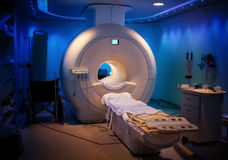
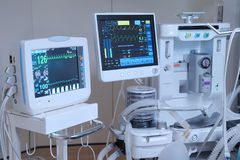
No matter the age, healthcare has become an integral part of our lives. Medical Devices are increasingly helping diagnostics for both young and old.
Technology allows for improvements in diagnostics as well as in communication, education, and patient support.







As enterprises increase their dependency on technology, executives indicate their companies are compelled to increase their investments materially in data privacy and cybersecurity, and alternative enterprise capabilities to sustain their functionality if faced with a cyber-attack.
People who might not have been able to access health care can now meet with a clinician through their phone or computer.

For 2021, investors will likely be looking closely at technology companies that are able to combine virtual care with a retail experience. Such a hybrid model might allow consumers to access primary care, behavioral health, or specialty care through a combination of virtual health and in-person visits at an urgent care location.
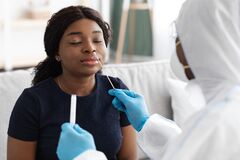
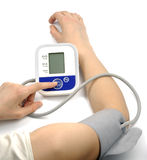
More diagnostic tools will be developed for home use: Many companies that have been successful during the pandemic have been those that have developed diagnostic tools and communications platforms that are easy for consumers to use.
Companies that already had an infrastructure in place were well-positioned when the pandemic hit. As diagnostic tools become more accessible, we expect consumers will grow more accustomed to monitoring their health at home.
Between 29% and 48% of consumers are comfortable using at-home diagnostics, according to publicly available results. The transportation and hospitality industries are now leveraging medical surveillance technology to monitor customer temperatures for safety.
Mergers and acquisitions will likely accelerate: We are a little more than a month into 2021, and we have already seen several key acquisitions and mergers:
- UnitedHealth Group’s Optum division, for example, recently said it would acquire Change Healthcare to help simplify clinical, administrative, and payment processes.
- CM LS announced with Sema4 that they intend to finalize the merger in 2Q 2021. The merger was approved by the stockholders of CM Life Sciences on July 21,2021. Eric Schadt, Ph.D.,Founder and Chief Executive Officer of Sema4, and Sema4’s current executive team will continue to lead the combined company.
- Why did CM Life Sciences merge with SPAC? Though separated initially, the strategy behind accessing the public-market capital from CM Life Sciences’ merger is to cover the entire spectrum of patient problems as they occur through life from auto-immune to pregnancy to oncology/cardiovascular.
- Teladoc Health, a platform for online medical visits, recently completed a merger with Livongo, a company that specializes in the digital management of chronic conditions.
- Humana, Inc. recently partnered with private equity to build out a network of primary care providers. The panelists noted that the US market is unique, which makes it particularly challenging for foreign companies.

Driving innovation and Start-Ups, entrepreneurs who define new markets, dominate them with a strategy people can understand, and extract value that will likely be the most successful.
Despite some of the challenges, the enormity of the US health care market means there is still plenty of runways left for entrepreneurs who have innovative ideas and the work ethic to turn those ideas into reality.
Our team offers the Medical Device Industry the full pallet of the Quantensprung Group service offerings.
The Quantensprung Group provides service offerings specific to the Life Science and Medical Device Industries:




Project and Program Management and Technical Leadership Providing End to End Fully Integrated Solutions For your GXP Needs
Quality Systems Development and Quality Assurance:
The Quality System (QS) is the infrastructure that defines a company’s ability to provide consistent, compliant, and high-quality deliverables by documenting processes, procedures, and responsibilities for achieving quality objectives. All operations are governed by the QS and oversight of the system and processes by QA is integral to whether a company is successful. We have the expertise to assist companies in establishing a phase-appropriate QS and ensure appropriate oversight of those systems.
Chemistry Manufacturing and Controls:
One essential requirement for product approval is the ability to manufacture commercial products after completing clinical scale CMC development activities. Consultants have a proven track record of ensuring all CMC requirements are in place for production operations that meet clinical development expectations as well as approval inspection expectations.




Regulatory Affairs and Regulatory Operations:
Our experts, Regulatory Affairs professionals are experienced at both strategic and operational levels. Consultants provide guidance and support for regulatory development activities and Health Authority meetings and provide regulatory writing and submission support when needed.
We also provide high-quality eCTD formatted publishing and e-submission services.
Discovery and Preclinical Operations:
Our consultants are well-versed in early-stage discovery and preclinical research and have a broad background in preclinical development. With this experience and thorough understanding of Good Laboratory Practices (GLP) and Good Documentation Practices (GDP), consultants support by developing sound scientific studies, robust reports, and ensuring traceability and data integrity, ultimately to ensure that the preclinical development package supports the planned clinical trials and NDA/BLA submission.


Strategic Consulting:
Expert Consultants have a broad range of experience in developing successful strategies encompassing research, development, clinical trials, and commercialization, resulting in speed to market.
Through our proprietary Quality System, they can assess the complete product lifecycle and identify the strategic execution elements necessary for product approval, assist in specific areas for acute issue resolution (i.e. environmental contamination in a manufacturing suite, 483/warning letter responses, and resolution, to consent decree remediation), or can provide targeted guidance for continuous improvement within the QMS.





Clinical Safety and Pharmacovigilance:
Having robust Quality Systems and QA oversight ensures clinical trials are planned with success and efficiency in mind. Consultants provide specific clinical operations services including, but not limited to clinical project management, development of SOPs and other clinical documents, monitoring and oversight, as well as data management and SAS® programming services. Subject matter experts are also experienced in SAE processing, narrative authoring, and review, and assessment and oversight of safety & pharmacovigilance (PV) vendors, while other drug safety and PV assistance are available through strategic partnerships.

 quantensprunggroup.com