Media & Entertainment Changing Market Dynamics
With the passing of the infrastructure bill, telecommunication companies will be able to reach much larger markets that had previously been difficult to acquire because of high capital costs for fragmented customer centers. These segments will create interesting market dynamics between the carriers and the Media and Entertainment providers.
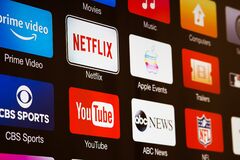
Audiences are more empowered than ever to assemble and rearrange their entertainment mix. How can streaming video services combine great content, data insights, and membership privileges to keep subscribers long-term?
Although the shift to streaming video services may seem inevitable, the media and entertainment industry is facing significant changes to more than just distribution and engagement. One of the most profitable business models appears to be fading. For decades, cable and satellite-based pay-TV have enjoyed margins typically reserved for energy companies.
Digital Transformation in the Telecommunications and M&E Is Far from Over
The transformation of the media and entertainment industry is far from over. While the lines between print and digital, pay-TV and OTT, and social and traditional media continue to blur, companies operating in the M&E space are re-envisioning every aspect of how they offer and deliver their services. The answer lies in leveraging the right technology to provide premium content personalized to the audiences’ preferences cost-effectively.
Modern-day agile consumers, responding to the new reality with enthusiasm, are compelling the media and entertainment market players to offer them new bundles and environments and D2C models with all-you-can-eat access to digital content, including music, videos, and games.
Content Consumption and the Emergence of New Market Players

Among the most profound digital media and entertainment trends in the post-COVID-19 world have been the phenomenal rise in content consumption and the emergence of new market players, retracting from video content aggregators like Netflix to stream their content direct-to-the-consumer (D2C).
In the face of the new reality, existing market players or content providers such as over-the-top (OTT) companies, well-positioned to meet the customers’ existential demands, managed to thrive. However, others facing strategic headwinds are realigning themselves to accelerate their digitization plans by looking for a reliable.
- In recent years, however, more of their audiences have been cutting the cord and subscribing to paid streaming video services.
- It will not be easy for media and entertainment companies to navigate this change. Launching a streaming video service is only the first step toward engaging, acquiring, and retaining audiences—and finding revenues to support it all.
- Content will always be king. But with the rising costs of producing TV and movies and the prevalence of “hit and run” subscribers who watch the hits then run for the door, streaming services may need more than great content.
- How can streaming video services attract, and most important, retain subscribers when consumers have so many choices and can so easily switch services?
- Paid streaming video services have become the new normal for most US consumers. In 2021, the “streaming wars” continue to accelerate, with most major pay TV players deploying their own direct-to-consumer subscription services and spending heavily on content—and customers.
Here Are Top 5 Digital Trends Poised to Reverberate through the M&E Industry in 2021 and Beyond:
- Direct-to-Consumer (D2C) Video Streaming:
Key Elements>>

The initial phase of the lockdowns imposed across geographies led to a spike in demand for internet services, with people streaming meaningful and high-quality video content.
However, on the flip side, OTT platforms are giving a run for their money to each other to gain a market foothold. Disney was the first to retract its content from Netflix and offer it through its own platform Disney+, based on the D2C model.
A potential evolution is that ultimately the broadband providers could change their pricing structure to add premiums to source content.
- Delivering Personalized Content:
Key Elements>>
- High Customer Acquisition Cost (CAC)
- Making relevant content discoverable
- Increasing average user content consumption
- Converting freemium users into paid subscribers
- Retaining the subscriber base
Ad-Based Business Models:
Key Elements>>
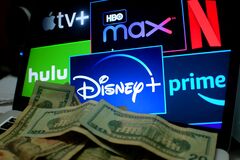
What initially drew the audiences towards online streaming was that they could watch content on-demand without sitting through advertisements, a viewing experience that traditional TV failed to offer. But now, with top studios and global media conglomerates foraying into the media streaming space, ad-supported content remains the only option to achieve economic viability.
- Ecosystem-Based Business Models:
Key Elements>>
Ecosystem-based business models operational across the media and entertainment industry are:
• Smart Content Providers
• Value Aggregators
• Value Creators - Emerging Technologies to Drive Innovation in the Telecommunications and M&E Industry is AI and Virtual Connecting.
Key Elements>>
• Tele-medicine
• Remote Workers
• Education
• Self-Service
• AI that includes emerging technology like smart vehicles and interacting hazard technology.
 quantensprunggroup.com